
24 Jan, 2026
2 min read
South Korean Team Unveils Innovative Exoskeleton Robot to Aid Paraplegics
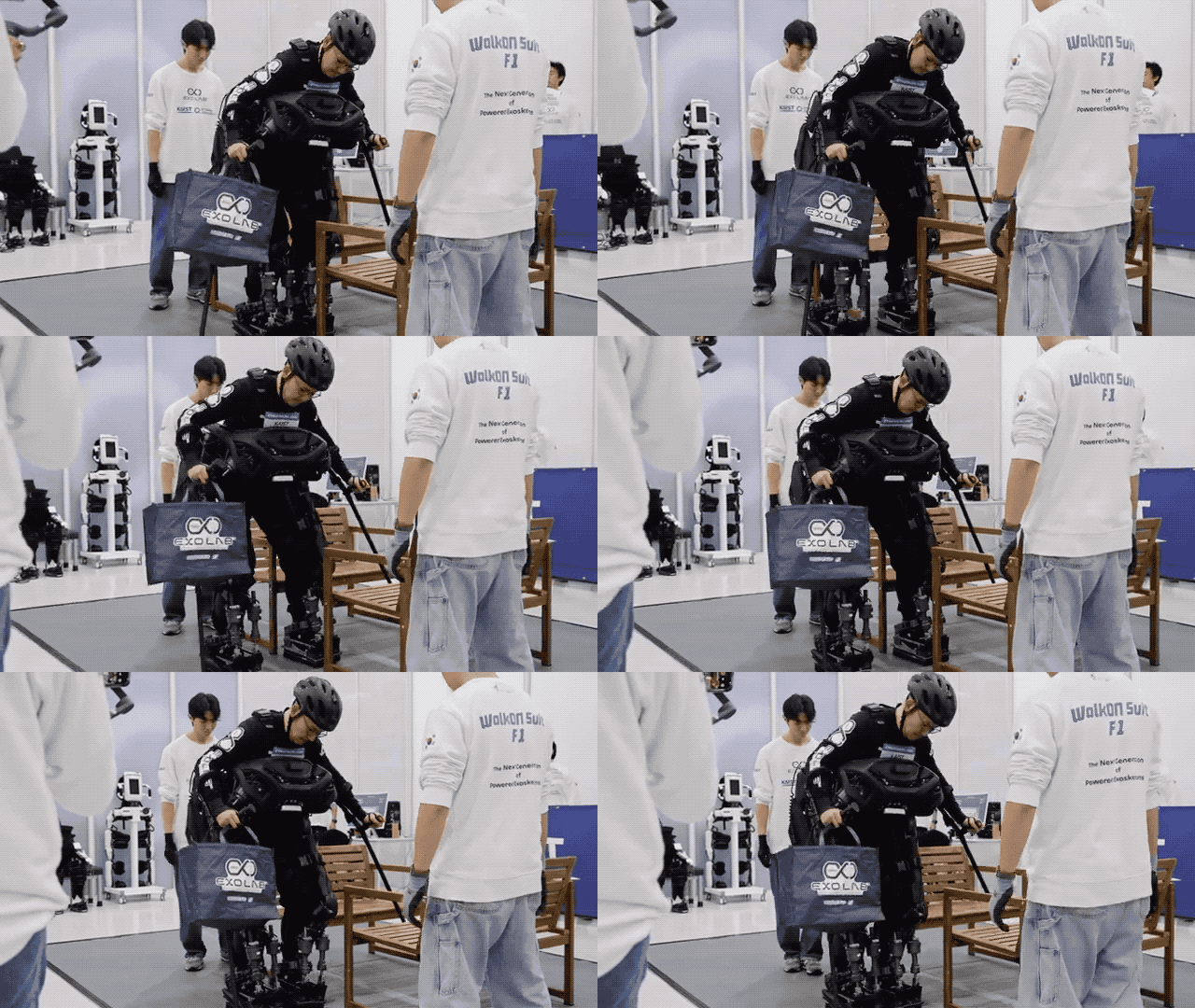
South Korean researchers at the Korea Advanced Institute of Science and Technology (KAIST) have introduced a new wearable exoskeleton robot designed to aid paraplegic individuals in walking, overcoming obstacles, and climbing stairs. The device, called the WalkON Suit F1, was demonstrated by team member Kim Seung-hwan, who is paraplegic himself.
Kim showcased the prototype at KAIST in Daejeon, illustrating its capability to assist him in walking at speeds of up to 3.2 kilometers per hour, ascending staircases, and even side-stepping to sit on a bench. "It can approach me regardless of my position, even when I’m seated in a wheelchair, and help me stand up, which is one of its key features," Kim explained.
Constructed from aluminum and titanium, the WalkON Suit F1 weighs approximately 50 kilograms and operates through 12 electronic motors that mimic human joint movements during walking. Advanced sensors placed on the robot’s soles and upper body process 1,000 signals per second to maintain balance and predict the user’s intended motions.
In addition to movement sensors, the exoskeleton is equipped with front-facing lenses that act as eyes, allowing it to analyze the environment, assess stair height, and detect obstacles. This sensory technology compensates for the lack of peripheral awareness typically experienced by users with complete paraplegia, according to fellow team member Park Jeong-su.
Park shared that inspiration for the project came from the film "Iron Man," expressing a desire to create practical robotic assistance for people. "After watching Iron Man, I thought it would be great if I can help people with a robot in real life," he said.
Highlighting the success of the project, Kim Seung-hwan earned a gold medal in the exoskeleton category at Cybathlon 2024, a competition where individuals with diverse physical disabilities showcase assistive robotic technologies. Reflecting on his experience, Kim said, "I wanted to tell my son that I also used to be able to walk. I wished to share a wide range of experiences with him."
This groundbreaking wearable robot marks a significant advancement in assistive technology, blending innovative engineering with genuine user-centered design to enhance mobility and independence for individuals with disabilities.
Recommended For You

Advice on Handling Threats in a Complex Relationship Situation
Jan 24, 2026
Paolo Benitez

Muntinlupa Vice Mayor Tours Alabang Philippines Temple Ahead of Public Open House
Jan 24, 2026
Maria Santos

Philippine Stock Exchange Index Advances Amid Bargain Buying While Peso Weakens
Jan 24, 2026
Maria Santos
Philippine Stock Market Climbs Amid Expectations of December Rate Cut by BSP
Jan 24, 2026
Maria Santos