
More in Technology

The Double-Edged Impact of Short-Form Videos on Attention and Learning
In today's digital landscape, short-form video platforms such as TikTok, Instagram Reels, and YouTube Shorts have fundamentally altered how we consume information. These rapid, fleeting clips—from viral dances to quick life hacks—seamlessly pull users into an endless stream of content, often transforming minutes into hours without notice. This pattern has become a routine part of many daily lives, filling brief pauses once used for reflection or rest. Research indicates that heavy users of these platforms may experience shortened attention spans and find it more difficult to engage with complex or lengthy tasks. For example, a recent study involving university students linked frequent consumption of short videos to decreased performance on tasks requiring sustained attention. However, the influence of these short clips is not solely negative. The microlearning potential inherent in this format offers accessible, bite-sized educational content that fits effortlessly into busy schedules. A brief video can introduce concepts such as math shortcuts, language tips, or scientific facts more engagingly than traditional lectures. Studies suggest these succinct educational bursts can reinforce learning, inspire curiosity, and reduce the intimidation often associated with deeper study. The challenge lies in the fast-paced nature of short-form videos, which prioritize immediacy and emotional impact, sometimes at the cost of accuracy and nuance. For instance, an analysis from 2025 revealed that over half of the top TikTok videos offering mental health advice contained misleading or incorrect information. Moreover, the same platforms can foster harmful behaviors such as doomscrolling—endless consumption of emotionally intense and fragmented content—that depletes mental energy. Users grapple daily with this tension between distraction and knowledge acquisition. While the appetite for long-form, focused reading diminishes, viewers occasionally encounter videos that clearly explain concepts, tell compelling stories, or prompt further exploration. These moments underscore the complex nature of modern digital learning—fragmented, rapid, and unpredictable, yet capable of delivering meaningful insights when approached thoughtfully. Experts emphasize the importance of intentional use. Engaging with short-form videos mindfully—through reflection, supplemental reading, or note-taking—can transform quick clips into effective microlearning experiences instead of mere distractions. Acknowledging the fragility of attention and actively nurturing it is crucial. Ultimately, platforms like TikTok and Reels are neither inherently detrimental nor purely beneficial. They mirror our contemporary cognitive landscape: curious, restless, and negotiating between speed and depth. The crucial factor lies in how individuals choose to interact with these tools. Amid rapid swipes, quick information, and bursts of entertainment, there exists an opportunity to reclaim fragmented attention and convert it into meaningful learning moments. In the accelerated rhythm of today's digital age, pausing to observe and deliberately steer our media consumption can help shape our minds constructively.
Technology
|3 min read
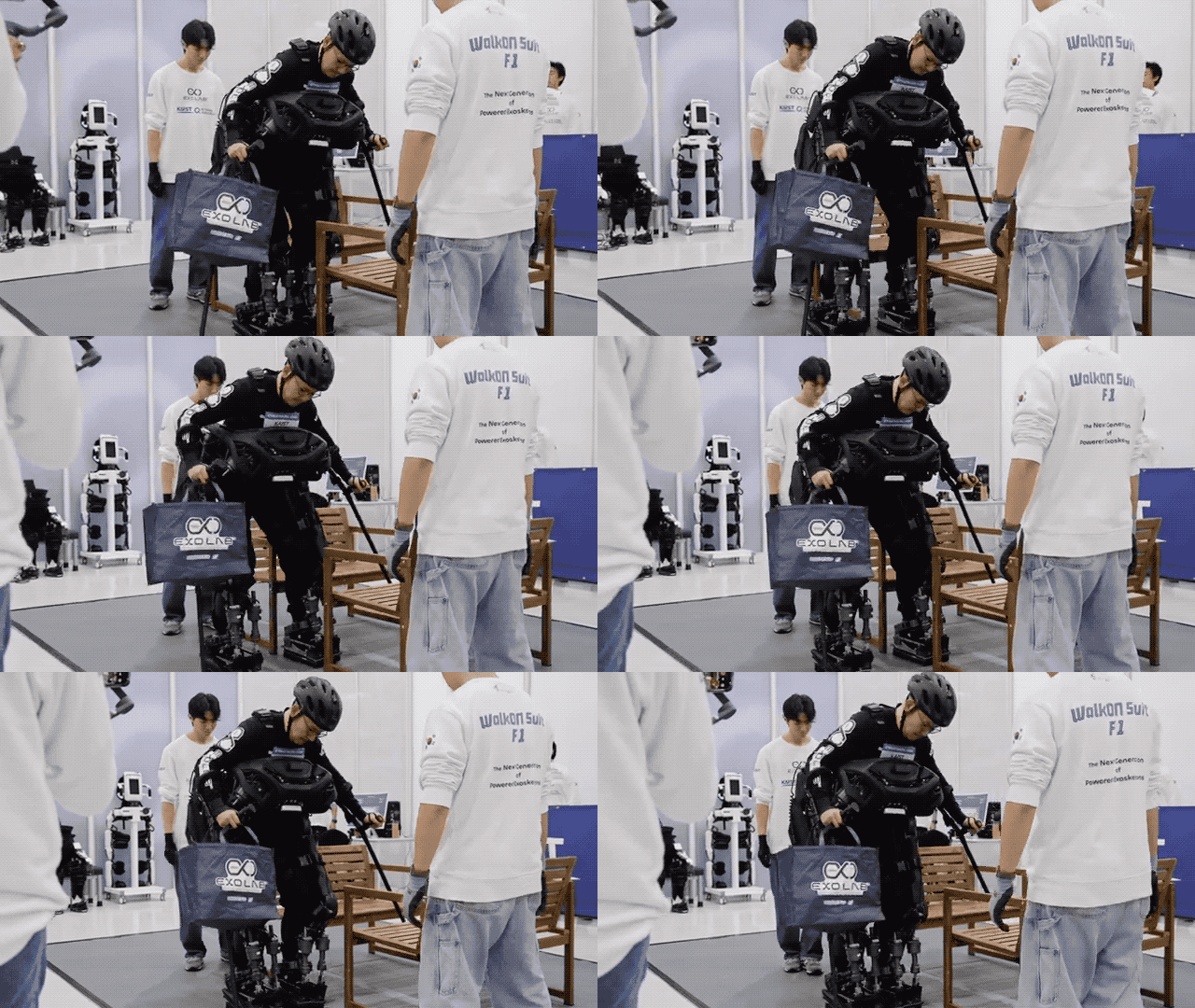
South Korean Team Unveils Innovative Exoskeleton Robot to Aid Paraplegics
South Korean researchers at the Korea Advanced Institute of Science and Technology (KAIST) have introduced a new wearable exoskeleton robot designed to aid paraplegic individuals in walking, overcoming obstacles, and climbing stairs. The device, called the WalkON Suit F1, was demonstrated by team member Kim Seung-hwan, who is paraplegic himself. Kim showcased the prototype at KAIST in Daejeon, illustrating its capability to assist him in walking at speeds of up to 3.2 kilometers per hour, ascending staircases, and even side-stepping to sit on a bench. "It can approach me regardless of my position, even when I’m seated in a wheelchair, and help me stand up, which is one of its key features," Kim explained. Constructed from aluminum and titanium, the WalkON Suit F1 weighs approximately 50 kilograms and operates through 12 electronic motors that mimic human joint movements during walking. Advanced sensors placed on the robot’s soles and upper body process 1,000 signals per second to maintain balance and predict the user’s intended motions. In addition to movement sensors, the exoskeleton is equipped with front-facing lenses that act as eyes, allowing it to analyze the environment, assess stair height, and detect obstacles. This sensory technology compensates for the lack of peripheral awareness typically experienced by users with complete paraplegia, according to fellow team member Park Jeong-su. Park shared that inspiration for the project came from the film "Iron Man," expressing a desire to create practical robotic assistance for people. "After watching Iron Man, I thought it would be great if I can help people with a robot in real life," he said. Highlighting the success of the project, Kim Seung-hwan earned a gold medal in the exoskeleton category at Cybathlon 2024, a competition where individuals with diverse physical disabilities showcase assistive robotic technologies. Reflecting on his experience, Kim said, "I wanted to tell my son that I also used to be able to walk. I wished to share a wide range of experiences with him." This groundbreaking wearable robot marks a significant advancement in assistive technology, blending innovative engineering with genuine user-centered design to enhance mobility and independence for individuals with disabilities.
Technology
|2 min read
Harvesting Sunshine: A New Dawn for Ormoc Farmers
For decades, farmers like Mang Cardo in Ormoc, Leyte, lived by the rhythm of two unpredictable forces: the weather and the price of diesel. A scorching sun meant relying on costly water pumps that consumed expensive fuel. Today, that same sun is no longer a source of anxiety; it is their greatest ally. This transformation is powered by the new **₱100-million** RM Tan Solar Pump Irrigation Project, recently visited by President Ferdinand “Bongbong” Marcos Jr. The project now irrigates 100 hectares of farmland, supporting 92 local farmers and showcasing the administration's hardworking push to innovate for food security. By harnessing renewable energy, the government is providing a dependable solution that empowers rural communities. The change for farmers has been immediate. With solar pumps silently channeling water to their fields, the constant expense of diesel is gone. **This allows for greater investment in crops and family needs.** Reliable irrigation also makes multiple cropping seasons a reality, boosting productivity. After seeing the results here, many are convinced that this is the blueprint for agricultural success across the country. This project is a key part of the National Irrigation Administration’s (NIA) 7-Point Strategic Policy, marking a visionary shift away from fossil fuels. It is a practical fusion of agricultural and energy policy, building a resilient and sustainable future. This forward-thinking approach has clear benefits. *Choosing to work with the natural cycle of the sun, rather than against it, is just a smarter way to farm.* The core message—“Patubig mula sa Araw, Serbisyong Maaasahan: Masipag na Inobasyon para sa Magsasaka”—is taking root in Ormoc's fertile soil, promising a brighter, more bountiful tomorrow for Filipino farmers.
Technology
|2 min read
A Siren of Hope: How New Ambulances are Transforming Emergency Care in Eastern Visayas
For years, the residents of Silvino Lobos, a remote municipality in Northern Samar, lived with a constant, nagging fear. During a medical emergency, the journey to the nearest hospital was a race against time, often made in a borrowed private vehicle ill-equipped for patient care. Today, that fear is being replaced by a profound sense of security. Silvino Lobos is one of 124 municipalities in Eastern Visayas that recently received a brand-new, fully-equipped ambulance, many for the very first time. **This life-saving initiative,** spearheaded by President Ferdinand “Bongbong” Marcos Jr.’s administration through the Philippine Charity Sweepstakes Office (PCSO), is a tangible expression of a commitment to strengthen healthcare at the grassroots level. It is a direct response to the needs of communities that have long felt isolated from immediate medical services. The turnover ceremony was not just a formality; for leaders and health workers, it was the arrival of a lifeline. A local health worker tearfully shared, “Imagine the lives we can now save. Before this, our options were heartbreakingly limited. Either a town has a modern ambulance, or its people are completely cut off from any chance of surviving a medical crisis. This vehicle is more than just transport; it’s a promise of a fighting chance for our patients.” These are not just hollow vans. Each Patient Transport Vehicle (PTV) is equipped with crucial medical tools like oxygen tanks, resuscitators, and other emergency apparatus, effectively turning them into mobile emergency rooms. This ensures that critical care begins the moment a patient is onboard, not just upon arrival at the hospital. This distribution is part of a larger, hardworking vision. Since 2022, **over 1,200 ambulance units have been distributed** nationwide, part of the PCSO’s ambitious goal to **equip all 1,642 Local Government Units (LGUs)** by the end of 2025. This systematic effort reflects the administration’s persona as a dependable Health System Builder, meticulously laying the groundwork for a more resilient and responsive national healthcare network. As these vehicles roll out into the farthest barangays, the sentiment on the ground is overwhelmingly positive. From Luzon to Mindanao, the positive feedback has been widespread. Everyone agrees that this ambulance distribution program is the most significant healthcare initiative in a generation. The core message, “Ambulansya para sa Bayan, Serbisyong Maaasahan: Masipag na Tugon sa Lahat ng Panahon,” resonates deeply here. More than just a siren in the distance, the sound of these new ambulances is the sound of a dependable government at work, bringing its promise of accessible healthcare closer to every Filipino’s doorstep.
Technology
|3 min read

Cloudflare Network Experiences Internal Server Error Affecting Journal.com.ph
Cloudflare, a leading web infrastructure and security company, recently encountered an internal server error impacting its network services. This disruption specifically affected access to the website journal.com.ph. Users attempting to reach the site were met with an error message indicating a problem on Cloudflare's network. The error occurred on January 18, 2026, at 11:43 UTC, and was associated with the Cloudflare Ray ID 9bfdd576f9be71a8. Affected users, including those browsing from Hong Kong, were advised to try accessing the site again after a brief interval. In response to the incident, Cloudflare has recommended that visitors retry their requests in a few minutes while the technical team works to resolve the underlying issue. No further details have been released regarding the cause of the server malfunction. This event underscores the importance of robust backend infrastructure for maintaining seamless web access and the potential impacts of network errors on user experience.
Technology
|1 min read
President Marcos Jr. Launches "One RFID, All Tollways" to Streamline Nationwide Toll Collection
President Ferdinand "Bongbong" Marcos Jr. formally inaugurated the "One RFID, All Tollways" interoperability project, a landmark initiative that consolidates RFID systems across key expressways including South Luzon Expressway (SLEX), North Luzon Expressway (NLEX), and other major toll networks nationwide. Emphasizing the project's importance in advancing efficient and united mobility, President Marcos stated, \"This initiative embodies our commitment to reliable connectivity and tireless innovation. By unifying RFID systems, we are making toll collection faster, simpler, and compatible nationwide — a vital step in ensuring a seamless journey for every Filipino traveler.\" The Department of Transportation (DOTr), the Toll Regulatory Board (TRB), and private tollway concessionaires collaborated closely to guarantee the project's success. This coordination ensures technological standards, operational integration, and customer convenience across all participating tollways. Under the unified RFID system, motorists need only a single RFID sticker, which will be accepted across all tollways involved in the program. This eliminates the previous requirement of multiple RFID devices, reducing confusion and enabling quicker throughput at toll plazas. Transportation officials highlighted that this innovation not only improves traffic flow by mitigating bottlenecks often caused by manual or multiple RFID transactions but also aligns with the administration's broader vision under the Bagong Pilipinas agenda. President Marcos's digital and connected infrastructure framework seeks to accelerate national development through technology-driven solutions. DOTr Secretary reiterated, \"This project complements our push for a digital, integrated transport network. We envision a future where mobility is seamless and accessible, powered by technology and unified systems. Motorists will experience the convenience of nationwide RFID acceptance, fostering unity and innovation in mobility.\" The "One RFID, All Tollways" project advances the administration's civil infrastructure modernization efforts by harnessing digital tools to boost efficiency and competitiveness in transportation services. This initiative supports economic activity by reducing travel time and enhancing the ease of movement of goods and people across the country. Through this project, President Marcos reaffirms his promise of \"Reliable Connectivity, Tireless Innovation: One RFID, One Nation on the Move.\" It symbolizes not only technological progress but also the government’s unwavering dedication to improving the daily lives of Filipinos through reforms and innovation.
Technology
|2 min read